SEO for contractors: how to show up when homeowners search Google
The plain-English version for roofers, plumbers, HVAC techs, electricians and every other trade. What to fix first, how long it takes, and how not to get ripped off.

Why the top spot matters
It is not about rankings. It is about the phone ringing.
SEO for contractors comes down to one thing: when a homeowner near you types the job you do into Google, your business shows up and they call you. Not a ranking report. Not “traffic.” Calls from people who need the work done.
For a contractor, almost all of that happens in local search. Someone types “plumber near me,” “roof leak repair,” or “AC not blowing cold” plus their town. Google shows a map with three businesses, then a list of websites under it. Local SEO for contractors is the work of getting into that map and onto that first page.
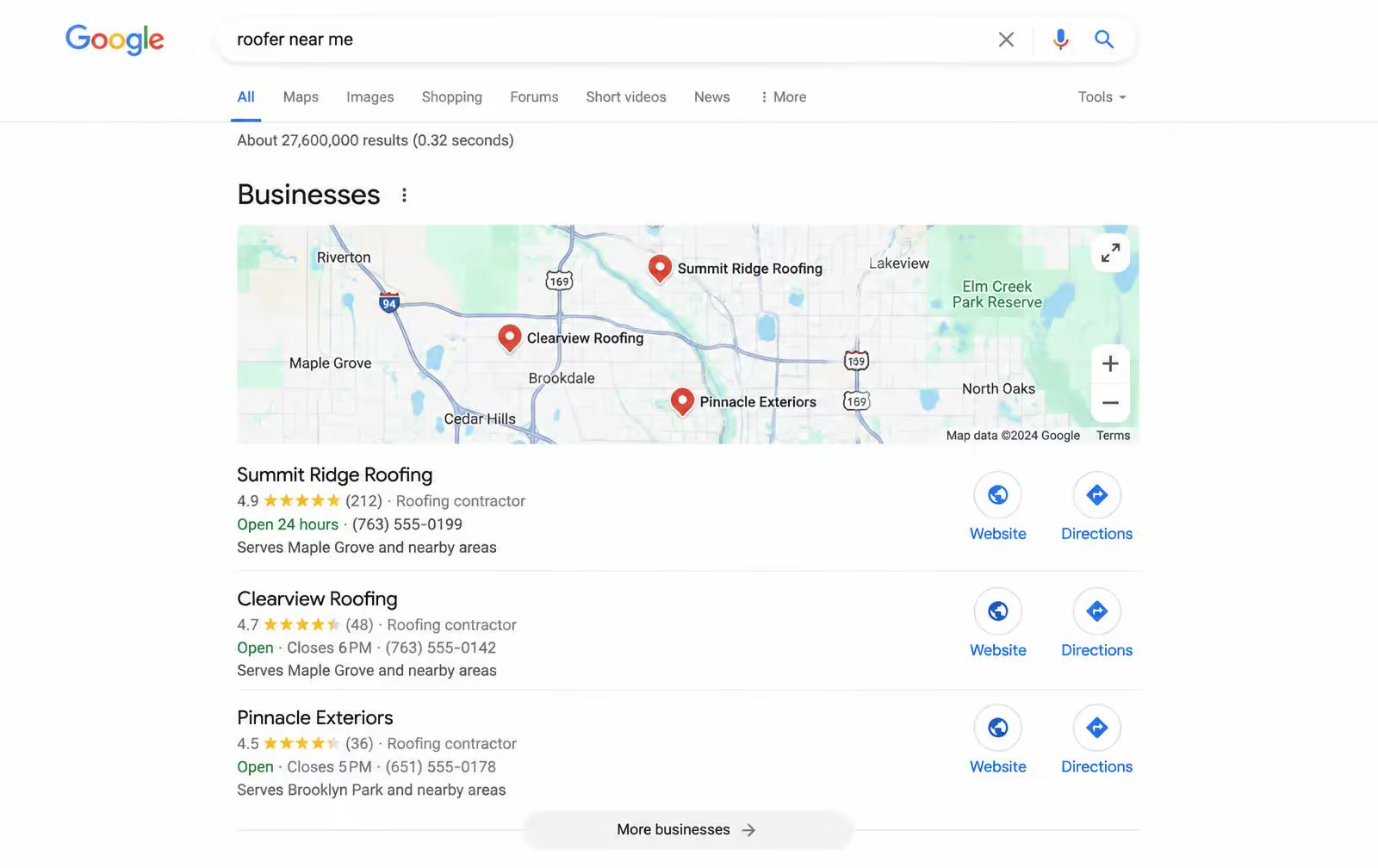
Google picks who goes in that map using three things. How close you are to the person searching. How well your business matches what they typed. And how trusted you look, which mostly comes down to your reviews and your website. You can't move your shop. The other two are yours to control.
Start with the guide for your trade
Every trade gets searched differently, so we wrote one full playbook per trade.
A roofer's best leads come after a storm. An HVAC company's come with the first heat wave. A pest control company lives on recurring service. The pages you build, the Google categories you pick, and the moment you ask for a review are different for each one. So we wrote a separate step-by-step guide for each trade.
- Roofing: storm jobs, insurance work, and the “roofer near me” map
- HVAC: seasonal rushes, emergency calls, and maintenance plans
- Plumbing: emergency searches that happen at 2 AM
- Electrical: panel upgrades, EV chargers, and looking trustworthy
- Landscaping and hardscaping: photos, seasons, and bigger-ticket projects
- Pool builders: long sales cycles and showing off finished work
- Painting, remodeling, pest control, and window tint
Links to every trade guide are at the bottom of this page. The rest of this page covers what's the same for every contractor: what to fix first, how long it takes, what it costs, and how to avoid getting ripped off.
What to fix first
In order. Don't skip ahead.
- 01Claim and finish your Google Business Profile
It's free and it's the listing that shows in the map. Pick the right main category, list every service and the towns you serve, and add real job photos. If you only do one thing this month, do this.
- 02Make your name and phone match everywhere
Your business name and phone number should be written the same way on your website, Google, Facebook, Yelp and the BBB. Small differences make Google less sure it's the same business.
- 03Get a website with one page per service
A one-page site that says “we do it all” gives Google nothing to match. A page for each main job, like water heater install, drain cleaning and repiping, gives Google a reason to show you for each of those searches.
- 04Put tap-to-call and text at the top
Most of these searches happen on a phone. If your number isn't one tap away, people hit back and call the next company.
- 05Ask every customer for a review by text
Send your direct review link right after the job, when they're happiest. Recent reviews count, not just the total.
- 06Add town pages for the areas you serve
Only for towns you really work in, and each one written differently: the neighborhoods, the kind of homes, a job you did nearby. Copying one page and swapping the town name doesn't work.
- Paying for a “premium” directory listing nobody visits
- Blog posts about nothing, written to hit a word count
- Stuffing keywords into your business name
- Buying reviews or backlinks
- A nice-looking site with no phone number at the top
- A complete Google profile with fresh photos every week
- One clear page for each service you want more of
- Real job photos instead of stock photos
- A review request text after every job
- A site that loads fast on a phone
How long it takes and what it costs
The honest version.
SEO is slow at the start and then it stacks up. A new website usually takes a few weeks just to get found and listed by Google. Movement in the map tends to show up over a few months of steady work. Your area matters a lot: a small town with five roofers is very different from a big city with fifty.
Anyone who promises you a specific spot on Google, or #1 in 30 days, is guessing. Google doesn't sell those spots and doesn't let anyone guarantee them.
What you'll pay
There are three ways to do it. Do it yourself: your Google profile and reviews are free, so the real cost is your time plus a website. Hire a freelancer or agency, usually on a monthly plan. Or use a done-for-you setup built for contractors, which is what we do. Whichever you pick, ask what you get each month in plain words: which pages, how many profile posts, and how reviews get requested.
SEO vs. buying leads
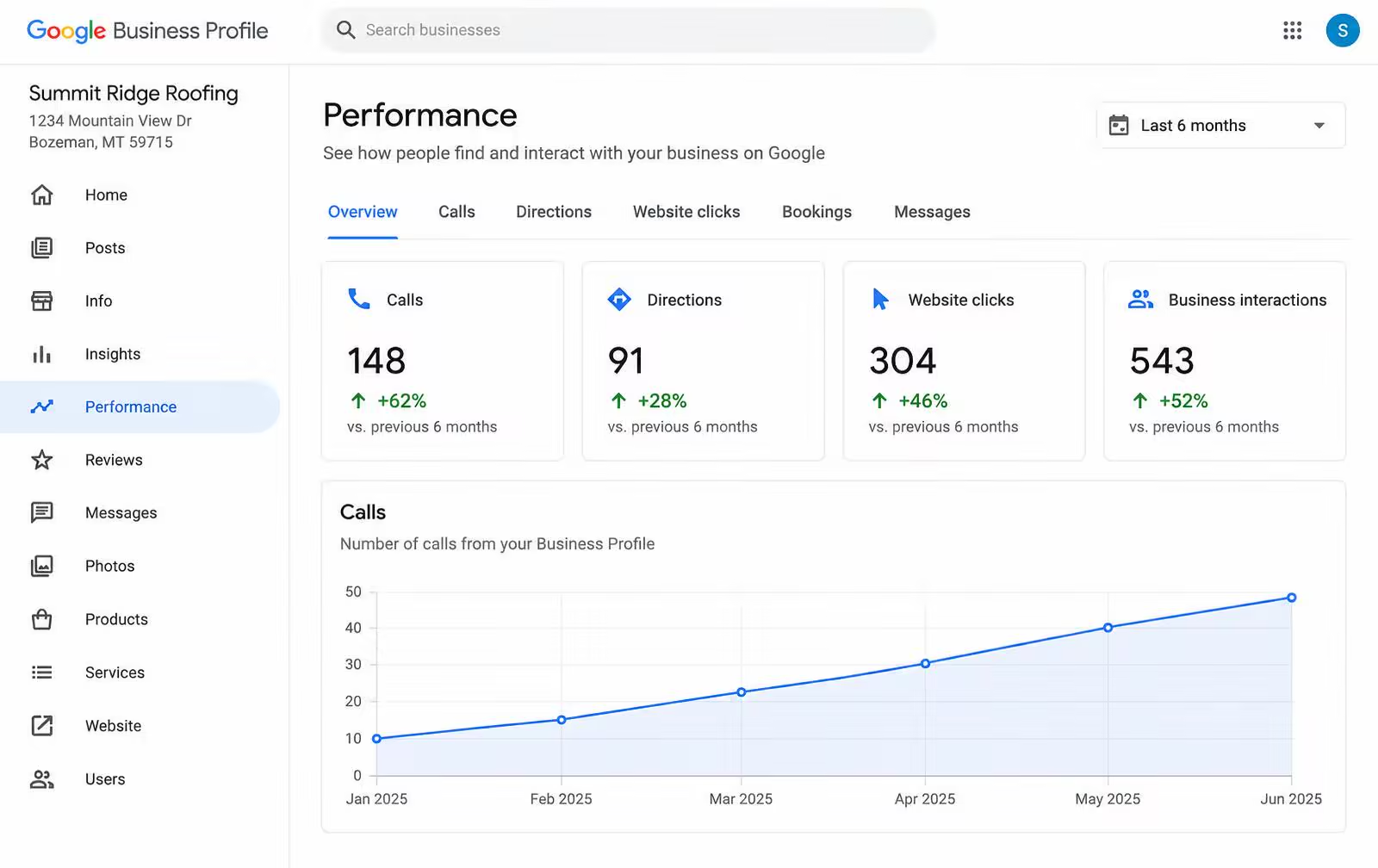
Lead sites like Angi, HomeAdvisor and Thumbtack can bring jobs fast, but you pay for every lead, the same lead can go to several contractors, and it all stops the day you stop paying. Ranking on Google takes longer, but those calls come to you alone and keep coming. Plenty of contractors buy leads to stay busy while their own ranking builds, then cut back.
How to spot a bad SEO company
Contractors get pitched constantly. Here's how to tell who's real.
Red flags
- They guarantee a #1 ranking or a set number of leads.
- They won't tell you what they actually do each month.
- They control your website, domain or Google profile and won't give you the login. You should always own your domain and your Google Business Profile.
- Long contracts you can't get out of.
- Reports full of “impressions” and “keywords” but nothing about calls.
- They sell backlinks by the hundred.
Ask these before you hire anyone
- 01Who owns my domain and Google profile?
The answer should be you.
- 02What will you do in the first 30 days?
You want specifics: profile setup, which pages get built, how reviews get requested.
- 03How will I know it's working?
Calls, texts and form leads, plus where you show up in the map from a few spots in your area.
- 04Can I cancel?
Ask before you sign. A long lock-in is a warning sign.
Words you'll hear (and what they mean)
So nobody can talk over your head.
- Map pack: the box with a map and three businesses at the top of a local search.
- Google Business Profile: your free listing on Google Maps and in the map pack.
- Local SEO: getting found for searches in the towns you serve.
- Citations: places online that list your business name and phone, like Yelp, the BBB and Facebook.
- Backlinks: other websites linking to yours. A few real ones from local groups and suppliers beat hundreds of junk ones.
- Title tag: the blue headline Google shows for your page in search results.
- Indexed: Google has found your page and can show it in search. A page that isn't indexed can't rank.
Common questions
What is SEO for contractors?
It means making it easy for homeowners near you to find your business on Google when they search for the work you do. Mostly that is your website, your Google Business Profile, and your reviews.
What is local SEO for contractors?
It is the part of SEO focused on the towns you serve: showing up in the Google map and in “near me” searches. For most contractors, local SEO is where the calls come from.
How long does contractor SEO take to work?
A new site usually takes a few weeks to get found by Google. Many contractors see movement in the map over a few months of steady work. It depends on your area and how many competitors you have.
Can I do SEO for my contracting business myself?
Yes. Your Google profile, reviews and a clear website are all things you can do yourself. Our trade guides walk you through it step by step.
Is SEO better than Google Ads or Angi leads?
They do different jobs. Ads and lead sites bring calls fast but stop when you stop paying. Ranking on Google takes longer but keeps bringing calls. Many contractors use both.
Do I need a separate website for each town?
No. Use one website with a page for each town you really serve, and make each town page different.
Hey, I'm Ayush.
I've helped contractors of all kinds get to the top of Google: roofers, HVAC companies, plumbers, landscapers, tint shops and more. Every website I build and every Google profile I set up has one goal: get you more calls so you book more jobs.
This guide is exactly what I do for my clients. If you'd rather spend your time on roofs, I'll build your website for free in 2 hours and take it from there.
YOUR BUSINESS.
#1 ON GOOGLE.
Free website in 2 hours. Then we help you climb the map.